

table top vanity mirror with lights
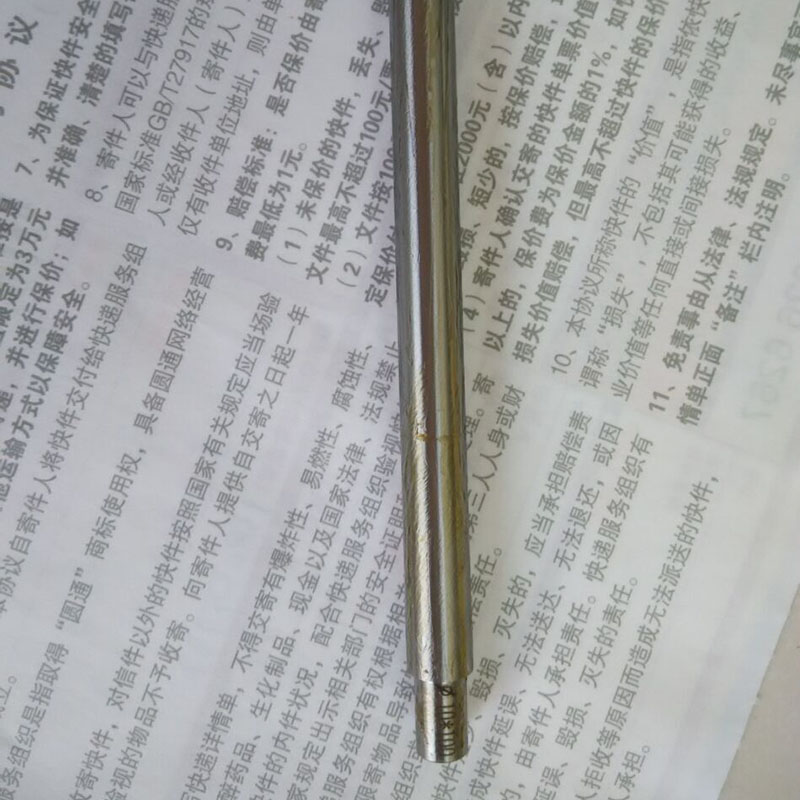
Understanding Tapering Gauges An Overview In the world of manufacturing and mechanical engineering, precision is paramount. Tapering gauges are crucial tools used to measure and assess the dimensions of conical surfaces, such as those found in pipes, tubes, and various fittings. By understanding tapering gauges—how they work, their types, and their applications—engineers can ensure that products meet necessary specifications and operate effectively. What Are Tapering Gauges? Tapering gauges are specialized measuring tools designed to check the taper of a surface. A taper is a uniform reduction in thickness or diameter along a length, often seen in machine parts and fittings. The importance of precise measurements cannot be overstated, as inaccuracies can lead to poor fittings, malfunctioning machinery, or even safety hazards. These gauges typically consist of a series of blades or pins, each calibrated to a specific taper angle. Users employ them to determine whether a given workpiece meets required tolerances. Tapering gauges are particularly useful in industries dealing with piping, automotive components, and aerospace parts, where accurately fitting edges are crucial for function and safety. Types of Tapering Gauges There are several types of tapering gauges available in the market, each designed for specific applications . Here are a few common types 1. Plug Gauges These are cylindrical in shape and are used to check the size of holes. They come in a variety of diameters and taper angles, allowing for versatile applications. 2. Ring Gauges Complementary to plug gauges, these are used to measure the outer diameter of cylindrical objects. They offer a quick way to assess the compatibility and fit between mating parts. 3. Feeler Gauges While they are not exclusive to taper measurements, feeler gauges can be used to check the gap or alignment in tapering structures by inserting blades of varying thickness. tapering gauges 4. Electronic Taper Gauges With advancements in technology, electronic taper gauges are becoming increasingly popular for their precision and ease of use. These gauges provide digital readings, simplifying the measurement process and minimizing human error. How to Use a Tapering Gauge Using a tapering gauge is a straightforward process. The first step involves selecting the appropriate gauge based on the angle and size of the taper to be measured. Inspect the tapering surface and insert the gauge until it fully engages the taper. A proper fit indicates that the workpiece is within the specified tolerances. If there is any gap, it signals that the surface might be out of specification. It’s worth noting that these gauges should be handled with care. Regular calibration and maintenance are recommended to ensure accurate measurements over time. Even a small deviation in the gauge can lead to significant errors in measuring the workpiece, resulting in costly mistakes in production. Applications of Tapering Gauges Tapering gauges find applications in various industries. In the automotive sector, they are essential for checking the conformity of engine components, ensuring that parts are manufactured to precise specifications for optimal performance. In pipe fittings, tapering gauges help ensure that pipes and connectors fit together correctly, which is critical in systems that require tight seals to prevent leaks. In aerospace, where every component undergoes stringent quality control, taper gauges play a critical role in assessing parts that must withstand extreme pressure and environmental conditions. Any precision variances can have severe consequences, making accurate measurements an integral part of manufacturing processes. Conclusion Tapering gauges are indispensable tools in the realm of precision engineering. They ensure that components fit together correctly, maintaining the reliability and safety of machinery and products. With various types to choose from, including traditional mechanical gauges and modern electronic versions, the significance of tapering gauges is evident across multiple industries. Understanding their use and maintaining their calibration is vital for engineers to deliver quality products that meet legal and safety standards. As industries continue to evolve, the role of tapering gauges will undoubtedly remain critical in the pursuit of precision and excellence in manufacturing.
about
table top vanity mirror with lights
Understanding Runout Testers Ensuring Precision in Manufacturing In the world of manufacturing and engineering, precision is paramount. The intricacies of mechanical components necessitate accurate measurements to ensure that parts function correctly and efficiently. One essential tool in achieving this level of precision is the runout tester, a device used to measure the deviation of a rotating component from its true geometric axis . Runout refers to the variation between the measurable position of a component at its maximum and minimum positions as it rotates. This can lead to unwanted vibrations, wear and tear, or even catastrophic failures if left unchecked. Therefore, assessing runout is crucial in various industries, including automotive, aerospace, and machinery manufacturing. Runout testers typically consist of a dial indicator mounted on a stable base, with a spindle that contacts the rotating part. As the component rotates, the dial indicator measures and displays the maximum and minimum deviations from the true center. Runout can be classified into two main types radial runout and axial runout. Radial runout examines the perpendicular distance from the center of the component to the outer edge, while axial runout focuses on the variation in the axial direction, which is critical for applications requiring precise alignment. The process of measuring runout is relatively straightforward. First, the component is securely mounted on a spindle or fixture. Once in place, the operator spins the component, watching the dial indicator for any fluctuations in the readings. A perfectly calibrated part will show minimal variation, while a significant deviation may indicate that realignment, machining, or other corrective actions are necessary. runout tester In industrial settings, maintaining tolerance levels is essential for ensuring product quality. For instance, in the automotive industry, runout tests are vital for rotating parts such as wheels and brake discs, where excessive runout can compromise safety and performance. For rotating machinery, like turbines or pumps, excessive runout could lead to imbalances, increased wear, and energy inefficiencies. Furthermore, advancements in technology have led to the development of digital runout testers, which offer enhanced accuracy and the ability to store measurements for analysis. These modern devices often feature features such as data logging, statistical analysis, and connectivity options for integration into broader manufacturing systems. Such enhancements not only streamline the measurement process but also improve the workflow, allowing for real-time monitoring and adjustments. Despite the evolution of technology, the core principle behind runout testing remains unchanged ensuring that components are produced to the highest standards. It is a small but vital part of quality control in manufacturing processes, contributing significantly to the overall performance and reliability of products. In conclusion, runout testers are indispensable tools in precision engineering. By effectively measuring and minimizing runout, manufacturers can uphold the quality and safety of their products. Whether through traditional dial indicators or advanced digital systems, ensuring precise measurements fosters a culture of quality that permeates the entire manufacturing process, ultimately leading to greater customer satisfaction and trust in the product.
-

High quality industrial productsagement

High quality industrial products
View Details -

Meet the diverse needs of customers

Meet the diverse needs of customers
View Details -

Strict quality control

Strict quality control
View Details -

Top raw materials

Top raw materials
View Details -

Trusted supplier

Trusted supplier
View Details
Our application



news and information
water valve shutoff
Navigating the realm of home maintenance and plumbing systems can often be a daunting task for homeo
vandkontrolventil 3 4
Vandprocent Tjekventil 3/4 En Nødvendighed i VVS-Installationer I enhver VVS-installation er der ele
Y-Shaped Strainer for Efficient Liquid Filtration Solutions
y shaped strainer .
 English